
Last Updated: November 21, 2026
Quick Summary
To save money on household essentials in 2026, start by taking inventory of what you already own so you stop buying duplicates. Then compare unit prices instead of shelf prices, try store brands on simple items, and buy in bulk only for products you will finish before they degrade.
- Walk through each room and record what you have, how much is left, and how fast you use it.
- Divide price by ounces, grams, sheets, or loads to compare cost per use, not shelf price.
- Store brands often match name brands for paper towels, trash bags, and dish soap.
- Buy bulk for paper goods and concentrates, but choose smaller packs for rarely used or opened items.
- Set a fixed monthly household essentials budget and review your spending once a month.
Table of Contents
- Start With a Household Essentials Inventory
- How to Save Money on Groceries Without Cutting Quality
- Comparing Unit Prices and Choosing Store Brands
- Bulk Buying Versus Smaller Packs: When Each Wins
- 10 Ways to Save Money at Home on Everyday Supplies
- How to Budget and Save Money on a Small Income
- Set Your Monthly Tracking Routine for 2026
- Frequently Asked Questions
Start With a Household Essentials Inventory
Most people overspend on household essentials because they buy before they check. A busy adult in a bright kitchen might empty a pantry shelf onto the counter, then find three half-used bottles of the same cleaner. Before you save money on household essentials in 2026, take stock of what you already own.
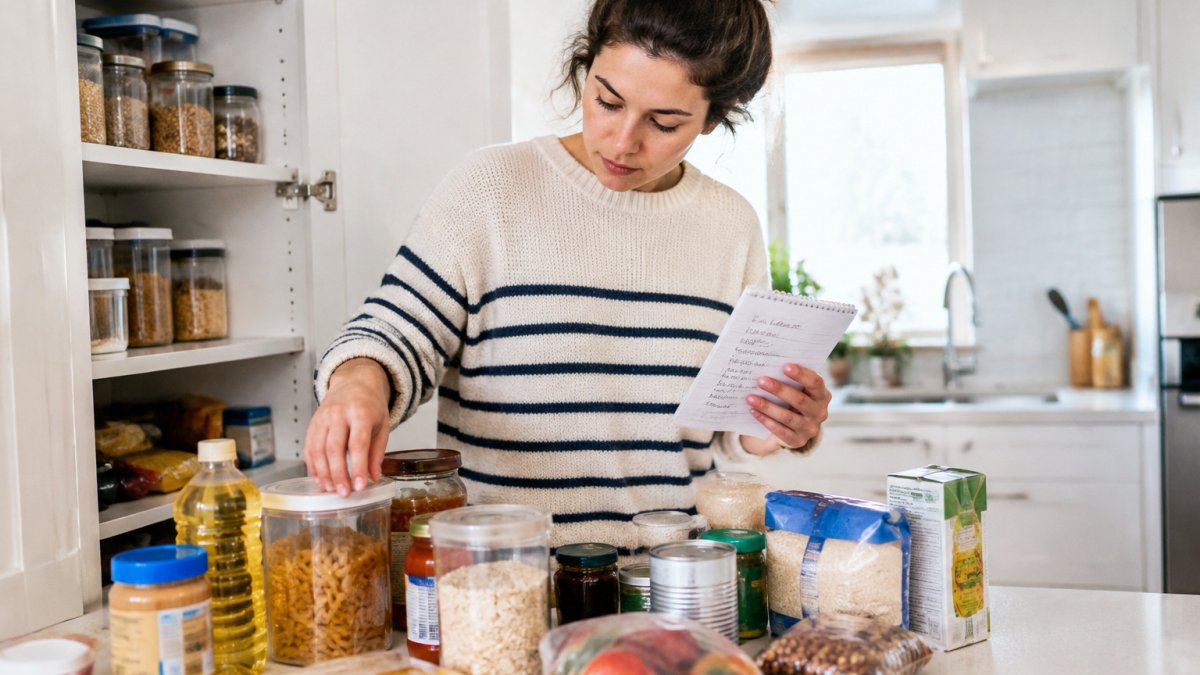
Start with a simple inventory. Walk through each room and write down what you have, how much is left, and how fast you use it.
Sorting Items by Category and Monthly Spend
Group your items into clear categories:
- Kitchen and food storage: wraps, containers, storage bags
- Cleaning and laundry: sprays, detergents, sponges
- Bathroom and personal care: toiletries, paper goods
- Kitchen tools and fixtures: knives, faucets, prep tools
Next, estimate what you spend each month in each category. Even rough numbers reveal where your money goes. Categories that cost you the most are usually the best places to start cutting.
How to Save Money on Groceries Without Cutting Quality
Cheap food is not the same as good value. The goal is to pay less for the same quality, not to buy lower quality.
Start by planning your meals for the week. Write a shopping list and stick to it. This one habit cuts impulse buys, which add up fast.
Store less food waste too. A vacuum sealed food storage box and sealer can help you keep leftovers and bulk purchases fresh for longer.
Comparing Unit Prices and Choosing Store Brands
The shelf price can mislead you. Check the unit price, which shows the cost per ounce, gram, or sheet. The smaller package is not always the better deal.
Store-brand products often match name brands for basic items like paper towels, trash bags, and dish soap. Try a store brand first, then decide if it works for you.
Watch out: a larger pack costs less per unit, but only if you will use it before it goes bad or runs out of shelf life.
Bulk Buying Versus Smaller Packs: When Each Wins
Bulk buying is the most over-recommended tip in the household-essentials space. It saves money only when three conditions line up: the item has a long useful life, you have somewhere to store it, and you will actually finish it before it degrades. Miss any one of those and the larger pack becomes the more expensive choice.
The unit-price math that decides it
The comparison is cost per use, not shelf price. Take the price of the pack and divide by the number of uses you realistically get from it. A large detergent bottle priced lower per ounce only wins if you use the full bottle; if half of it sits in a garage for two years, the effective cost per load rises.
Where bulk reliably wins
- Paper goods: toilet paper, paper towels, and tissues store well, are used constantly, and do not expire. This is the safest bulk category.
- Laundry detergent and cleaning concentrates: concentrates are diluted at use, so a large bottle lasts a long time and storage is compact. Check the dilution ratio before assuming a concentrate is cheaper per clean.
- Dry pantry staples: rice, pasta, flour, and dried beans keep for months in airtight containers. Buy in bulk only if you have sealed storage; open bags invite pests and staleness.
- Trash bags and sponges: low spoilage risk and steady use make these good candidates for larger packs.
Where smaller packs win
- Items you use rarely: a giant bottle of a specialty cleaner you reach for twice a year will outlive its usefulness. Buy the smallest size that covers the next few months.
- Products with short shelf life after opening: some toiletries and food items degrade once opened, so a larger container can spoil before you finish it.
- Small households and limited storage: a single person or a couple in a small apartment often cannot store a bulk pack without clutter, and clutter itself drives duplicate purchases because you cannot see what you have.
- First-time trials: never buy bulk on a product you have not tested. Buy one, use it, then commit.
The storage and cash-flow trade-off
Bulk buying ties up cash in inventory. A household on a tight monthly budget may be better served by buying smaller packs more often, even at a slightly higher unit price, because the cash stays available for other essentials. Storage is the second constraint: if a bulk pack does not fit in a designated spot, it tends to get shoved into a closet and forgotten, which is the same as not buying it. Designate a shelf or bin for bulk items before you buy them.
A repeatable monthly check
Once a month, list the items you finished and the items you threw away. Items you finished are bulk candidates; items you threw away are smaller-pack candidates. That single list, kept for two or three months, tells you more about your household's real buying pattern than any general rule.
The right pack size depends on how fast you use the item, how much storage you have, and whether it keeps well.
| Item type | Bulk or small pack | Why |
|---|---|---|
| Paper goods | Bulk | Store well, used constantly, do not expire |
| Laundry detergent and concentrates | Bulk | Compact storage, lasts a long time |
| Dry pantry staples | Bulk, if sealed storage | Keep for months in airtight containers |
| Trash bags and sponges | Bulk | Low spoilage risk, steady use |
| Rarely used specialty cleaners | Small pack | Can outlive their usefulness |
| Opened toiletries and foods | Small pack | Degrade once opened |
| Small homes with limited storage | Small pack | Bulk packs cause clutter and duplicate buys |
| Untested products | Small pack | Buy one, try it, then commit |
10 Ways to Save Money at Home on Everyday Supplies
Generic lists tell you to "buy store brands" and "use coupons." A useful list tells you which categories actually move the needle and how to check the math.
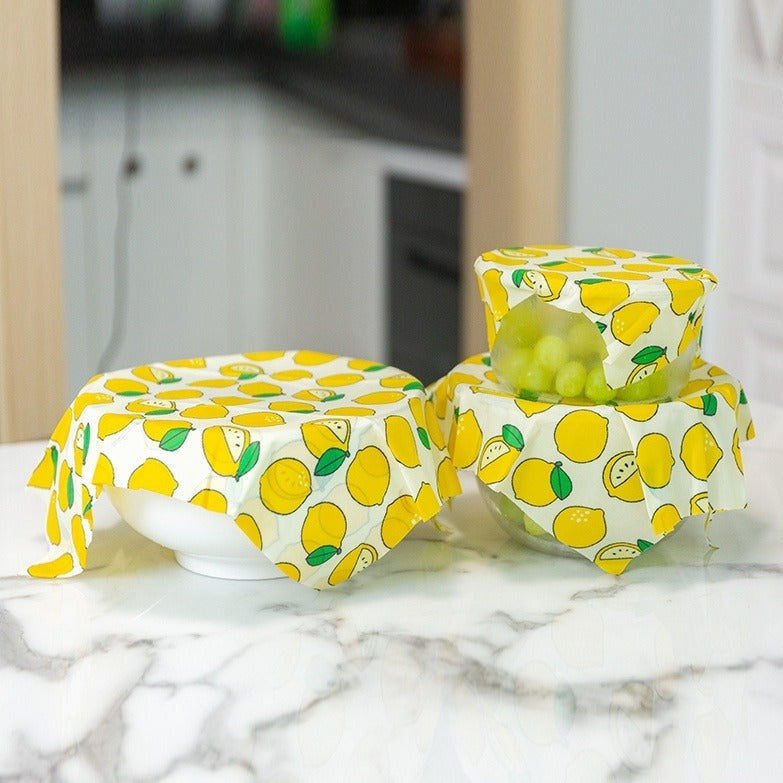
- Switch from plastic wrap to reusable covers for high-frequency items. Plastic wrap is a low-ticket purchase that recurs weekly, which makes it a good candidate for replacement. A cotton beeswax fresh-keeping cloth is a reusable packaging cloth made from organic cotton and food-grade beeswax, sold in multiple sizes. Compare the cost of one cloth against the number of wrap boxes you would buy in a year; the cloth only wins if you actually reuse it, so keep it within reach of the counter.
- Store leftovers in airtight containers to cut food waste. Food waste is the hidden cost inside the grocery line. A container you already own costs nothing incremental; buying a new set only pays back if it prevents repeated spoilage. Track one week of thrown-out food before buying storage gear.
- Fix leaks and drips quickly. A dripping faucet is a utility bill problem, not a supplies problem. A 1080° rotatable faucet extender lets you reach and clean sink areas from multiple angles, but the savings come from stopping the drip, not from the accessory.
- Check unit prices before every purchase. The shelf price hides the real comparison. Divide price by ounces, grams, sheets, or loads to get cost per use. A 12-roll pack at one price and a 6-roll pack at another can reverse order once you divide by sheet count.
- Compare store brands against name brands category by category. Store brands tend to hold up well on paper towels, trash bags, and dish soap, where the product is simple. They are riskier on items where formulation matters, laundry detergent for sensitive skin, for example, so test one item at a time instead of switching a whole category at once.
- Buy produce in season and freeze the surplus. In-season produce is cheaper per pound, and freezing what you cannot use within a few days converts a short shelf life into a longer one. This is a grocery-line saving, not a supplies saving, but it frees budget for the categories that matter.
- Use a vegetable chopper to get more out of fresh produce. Pre-cut produce carries a convenience premium. A chopper lets you buy whole vegetables and process them yourself, which lowers cost per serving if you actually use the tool.
- Keep a running list of what you need between trips. A list is the cheapest impulse-control tool available. Add items as they run low instead of making a mid-week trip for one item, which is where duplicate purchases happen.
- Clean with fewer, multi-purpose products. A drawer of single-purpose cleaners is a category where consolidation saves money. One all-purpose cleaner plus one disinfectant covers most surfaces; check dilution instructions on concentrates so you do not overuse product.
- Review recurring household purchases every few months. Subscriptions, auto-deliveries, and standing orders are the easiest place for spend to drift. Put a calendar reminder to review them quarterly and cancel anything you have not used since the last review.
Watch out: a cheaper substitute can cost more if it underperforms. If a store-brand detergent leaves residue or a discount paper towel tears apart, you will use more per task, which erases the unit-price advantage. Test one item at a time and keep a note of what worked.
How to Budget and Save Money on a Small Income
A small income makes every purchase matter. Start with a basic budget. List your monthly income, then list every household essential you pay for.
Set a fixed amount for household essentials each month. When that money runs out, wait until next month before buying more. This simple limit stops overspending.
Plus, track your spending for one month. Most people find a few small purchases that add up to a lot.
Set Your Monthly Tracking Routine for 2026
Saving money is easier when you check your progress. Set one day each month to review your receipts and spending.
- Record total household spending by category
- Compare this month's costs against last month
- Note items you ran out of too quickly or bought too often
- Adjust your shopping list and budget for next month
A consistent routine helps you save money on household essentials throughout 2026, not just for a few weeks.
Ready to build a smarter household essentials routine? Explore the full range at AP Retail Mart and find quality basics that fit your budget.
Frequently Asked Questions
How can I save money on household essentials in 2026?
Start by listing every household essential you buy each month, then compare unit prices rather than sticker prices. Switch to store brands for items like paper goods, cleaning supplies and toiletries where quality is comparable, and buy consumables you use every week in sizes that match your actual usage. Track spending for one month before changing habits, so you can see which categories cost the most and where a simple switch will save the most.
What household essentials should I buy in bulk?
Buy in bulk only items you use regularly and that keep well, such as laundry detergent, paper towels, toilet paper, dish soap and pantry staples like rice or oats. Check the unit price on the shelf label before committing, because large packs are not always cheaper per unit. Avoid bulk buying anything you might not finish before it expires or loses effectiveness, and avoid stocking up on items that would crowd your storage space.
Is it cheaper to buy household essentials online or in stores?
It depends on the item and the timing. Online shops such as AP Retail Mart let you compare prices across categories quickly and avoid impulse purchases, while in-store shopping lets you see pack sizes and quality before you pay. Compare the unit price in both channels for the same product, and factor in delivery costs and minimum order amounts before deciding where to buy.
How do I make a budget for household essentials?
Review the last three months of receipts or bank statements and total what you spent on cleaning supplies, toiletries, paper goods, kitchen items and pantry staples. Set a monthly cap for each category, using the lowest typical month as your baseline. Track spending weekly against those caps and adjust the amounts every quarter, so the budget stays realistic rather than becoming another thing to abandon.
