
Last Updated: November 20, 2026
Quick Summary
Lumbar support pillows can be worth it for desk jobs because they fill the gap between your lower back and a flat chair backrest, helping keep the spine's natural inward curve supported. Choose a product with high-density or memory foam, medium-firm support, and adjustable straps, and remember that a pillow works best as part of a broader workstation setup.
- Support should sit at the small of the back, roughly at the belt line.
- Low-density foam compresses within weeks, so choose high-density or memory foam.
- Thick pads push you forward; shallow seats usually suit 1 to 2 inch pads.
- Measure the gap behind your lower back before ordering a size.
- A pillow may not help if your chair or screen height forces you to hunch.
Table of Contents
- Why Desk Workers Need Lumbar Support
- Quality Lumbar Support for Desk Jobs: What to Look For
- Portable Lumbar Support for Office Chairs: AP Retail Mart Options Compared
- Orthopedic Back Support for Chairs: Fit, Sizing and Comfort
- When a Lumbar Pillow May Not Help
- Choosing Your Desk Lumbar Support Next
- Frequently Asked Questions
Desk work is hard on the lower back, and a lumbar support pillow is one of the cheapest ways to change how you sit. AP Retail Mart sells wellness and ergonomic accessories alongside everyday household and tech products. This guide explains what separates a useful lumbar product from a cheap one, compares the options we stock, and shows when a pillow is unlikely to solve the problem.
Put simply, a lumbar support pillow is a cushion that fills the gap between your lower back and the chair backrest, keeping the spine's natural inward curve supported. A pillow works best as part of a broader setup rather than a fix on its own.
Why Desk Workers Need Lumbar Support
Sitting for long periods can flatten the lower back's natural curve. A chair with a flat backrest does little to counter this, which is why so many office chairs leave a gap behind the lower back.
Lumbar support can fill that gap and encourage a more upright position. It is not a cure for back pain. If you have ongoing pain, speak with a qualified healthcare professional first.
Quality Lumbar Support for Desk Jobs: What to Look For
Not every lumbar product is built the same way, and the differences that matter at a desk are specific. Before you buy, check these points against the product you are considering.
- Support height and geometry: The support should sit in the small of your back, roughly at the belt line or just above it, where the spine curves inward. A contoured pad with a gentle inward curve holds that shape better than a flat block. If the pad is too tall, it pushes into the mid-back; too short, and it misses the lumbar curve entirely.
- Foam type, density, and firmness: High-density molded foam or memory foam holds its shape through daily sitting, while low-density filler foam compresses within weeks and stops supporting the curve. Firmness is personal: most desk workers do better with medium-firm support that resists compression but still gives slightly under body weight. A cushion that feels very soft in the store is usually the first to flatten.
- Thickness and seat-depth interaction: A thick pad pushes you forward on the seat, which reduces how much of your thigh is supported and can make the seat feel short. If your chair already has shallow seat depth, a thinner pad (around 1 to 2 inches) usually works better than a deep cushion.
- Attachment and adjustment: Straps, double pull cords, or a high-friction back keep the pad at the right height. Adjustable straps let you raise or lower the support on different chairs; a fixed cushion that sits too high or too low usually gets abandoned. Check that the strap length matches your chair's backrest width and that the buckle does not dig into the seat.
- Breathability and heat: Mesh covers, perforated foam, or breathable fabric matter during long sessions, because trapped heat makes a support uncomfortable fast. If you run warm, favor an open-weave cover over a solid synthetic one.
- Cover material, removability, and cleaning: A removable, washable cover extends the life of the product and keeps it hygienic. Look for zippered covers and covers that can be machine washed on a gentle cycle.
- Compatibility with your chair: Confirm the product works with your chair's backrest shape. Some supports suit high-backed task chairs better than low-backed or gaming chairs, and chairs with a pronounced curve or a mesh back may need a different attachment style.
- Durability and ownership cost: Foam compression, strap wear, and cover condition are what determine how long a support lasts. A washable cover and a replaceable strap are small features that add years of use, so compare cost per year of expected use rather than sticker price alone.
Compare the features above before comparing prices.
Watch out: a pad that is too firm or too thick can push you forward and create new discomfort at the front of the seat, so test the fit before committing to a long session.
The features that matter most at a desk are summarised below, so you can check a product against them before you buy.
| Feature | What to check | Why it matters |
|---|---|---|
| Support height | Sits at the small of the back, near the belt line | Fills the spine's inward curve |
| Foam type | High-density or memory foam | Low-density foam compresses within weeks |
| Firmness | Medium-firm, resists compression | Soft pads flatten quickly |
| Thickness | Around 1 to 2 inches for shallow seats | Thick pads push you forward |
| Attachment | Adjustable straps or double pull cords | Keeps the pad at the right height |
| Breathability | Mesh or perforated foam | Trapped heat makes long sessions uncomfortable |
| Cover | Removable, machine-washable | Extends life and keeps it hygienic |
Portable Lumbar Support for Office Chairs: AP Retail Mart Options Compared
If you want support that moves between chairs, travels with you, or works on a chair you do not own, a portable option is the practical choice. Below are the four products we stock that fit this use. Each suits a different situation.
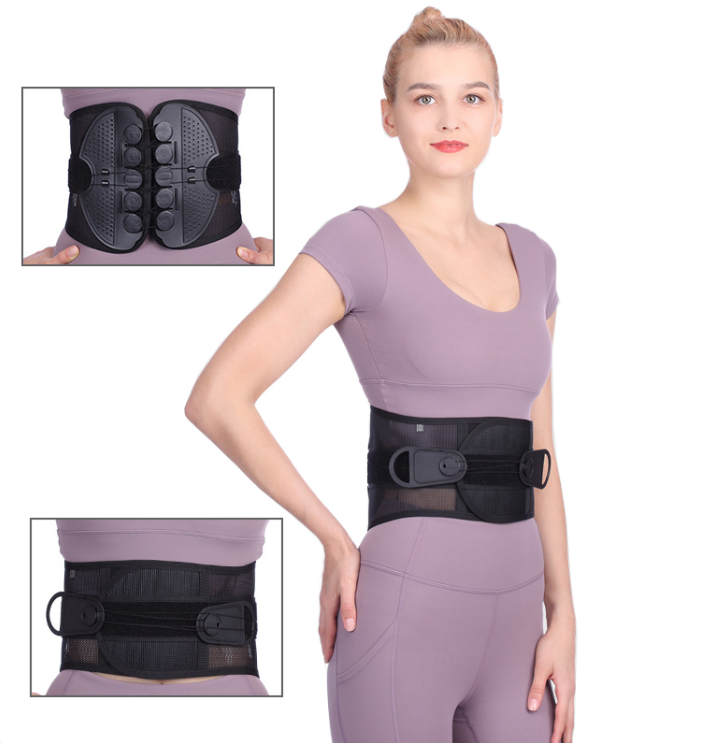
Double Pull Lumbar Support Belt
The Double Pull Lumbar Support Belt uses adjustable double-pull straps, so you can set the fit around your lower back and tighten it to your preference. At $16.29, it is the most affordable option here. It works well for people who want a simple, adjustable band rather than a cushion.
- Pros: Low price, easy to customize
- Cons: Provides firmer compression than a cushion
Best for: Budget-minded desk workers who want an adjustable, no-fuss band.
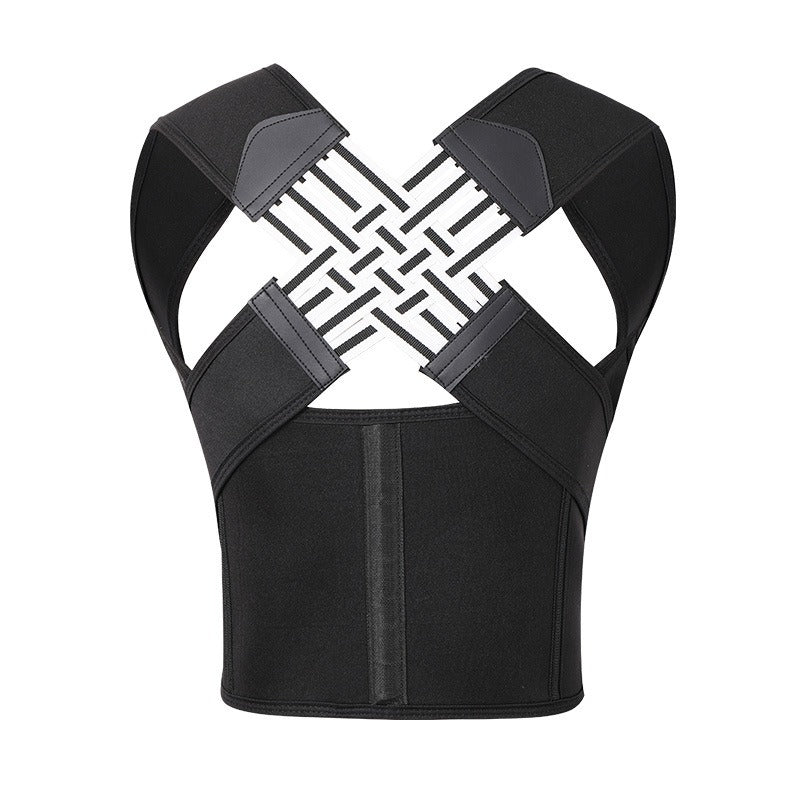
Unisex Adjustable Back Brace
The Unisex Posture Corrector Back Brace is made from breathable nylon and is designed to fit under clothing, so it stays out of sight at the office. It comes in four colors and sizes S to XXXL, with one-piece or two-piece options, and starts at $9.90.
- Pros: Very low price, designed to fit under clothing, breathable material
- Cons: Designed as a posture brace rather than a lumbar cushion
Best for: Anyone who wants a discreet posture aid at a low price.
Red Light Heating Waist Belt
The Long Wave Red Light Therapy Heating Waist Belt pairs a lightweight, adjustable design with an external remote control. It is available in blue and black and starts at $90.48. Power adapter options are available for US, UK, European, and Australian plugs.
- Pros: External remote control for adjustments, lightweight
- Cons: Higher price, and it needs a power source
Best for: Desk workers who want heat as part of their routine and do not mind the higher cost.
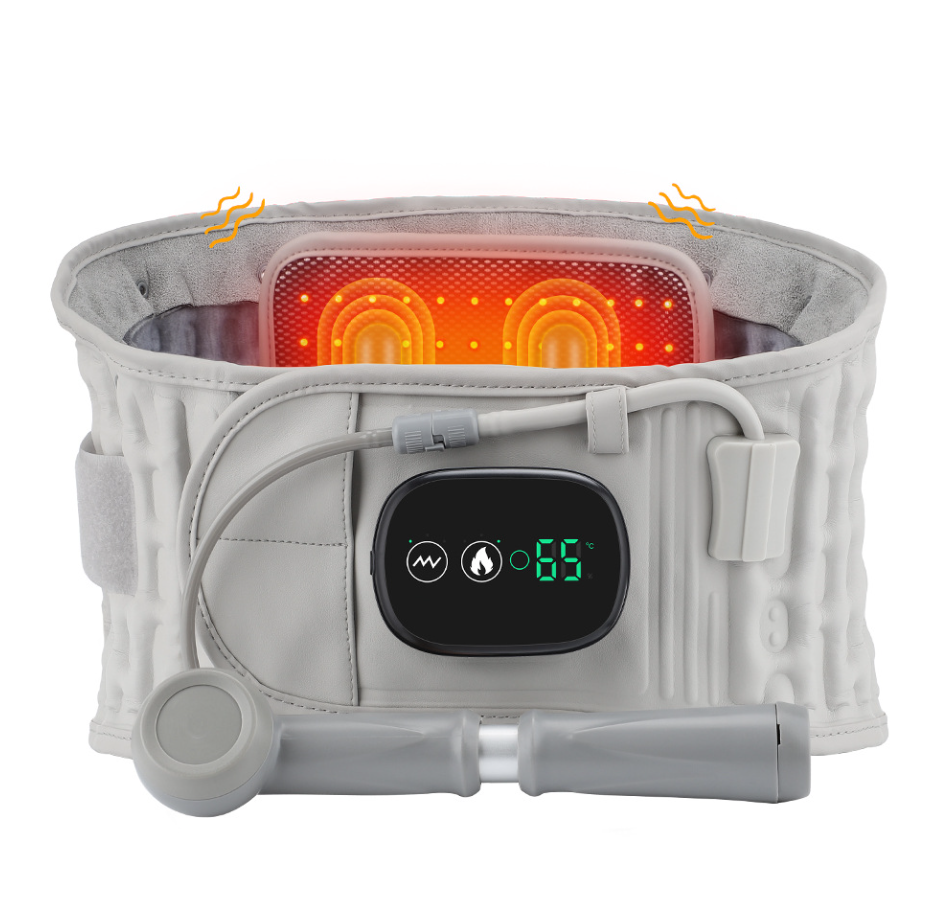
Infrared Red Light Heating Massage Belt
The Infrared Red Light Heating Massage Belt is the most premium option here at $173.64. It has adjustable straps and soft, breathable materials, and it fits around the back, abdomen, or waist for use at home or while traveling.
- Pros: Heating and massage features, portable, breathable
- Cons: Highest price in this group
Best for: Those who want a full heat-and-massage setup and are prepared to pay for it.
Prices of portable lumbar support options at AP Retail Mart
Orthopedic Back Support for Chairs: Fit, Sizing and Comfort
Orthopedic-style back support is designed to match the shape of the lower spine rather than just filling a gap, and fit matters more than the label. The right height and thickness depend on your body dimensions and your chair, not on a single universal size. Here is a practical method you can use before ordering.
Measure your lumbar curve. Sit upright in your chair and slide a hand behind your lower back. Note where the gap is deepest, usually just above the belt line. Measure from the seat surface to that point; this is the height your support should center on. Then measure the depth of the gap with your hand flat; a pad that is much thicker than the gap will push you forward, while one that is much thinner will not fill it.
Match the pad to your torso length. A support that suits a tall person may ride too high on someone shorter. As a rule of thumb, the top of the pad should sit below the bottom of your ribcage, and the bottom should reach the top of your pelvis. If you are petite, look for a shorter, thinner pad; if you are tall, a taller contoured pad covers more of the lumbar curve without pressing into the mid-back.
Check seat depth and desk height together. Seat depth should leave about two to three fingers of space behind your knees, and your feet should rest flat on the floor or a footrest. If the seat is too deep, you will slide forward and lose the lumbar contact; if the desk is too high, you will hunch regardless of the pad. Adjust the chair first, then fit the support.
Test the fit in the chair you actually use. Lean back with the support in place and check that you can sit upright without strain. If the support pushes you forward or digs in, try a different height or size. A support that feels fine for five minutes but uncomfortable after an hour is the wrong fit, so test it through a full work session if you can.
Account for body shape and chair design. Different body shapes need different pad profiles: a rounder lower back may suit a softer, deeper contour, while a flatter back may do better with a firmer, shallower pad. Chairs with unusual back designs, such as mesh backs, low backs, or built-in lumbar curves, may need a strap-on pad rather than a full cushion, and some chairs already provide enough lumbar support that an add-on pad only gets in the way.
Look beyond the pillow. Lumbar support works as part of a whole-workstation setup. Monitor position at about arm's length and the top of the screen near eye level, a desk height that lets your elbows rest near 90 degrees, foot support, and regular movement breaks all interact with the pad. If those are off, a pillow alone rarely fixes the discomfort.
When a Lumbar Pillow May Not Help
A lumbar pillow is not the answer for every sitting problem. It may do little if your chair is the wrong height for your desk, if your screen sits too low and forces you to hunch, or if you rarely sit back in the chair at all. In those cases, fixing the workstation usually matters more than adding support.
Persistent or worsening pain should be checked by a healthcare professional (the NHS).
Choosing Your Desk Lumbar Support Next
Start with your chair. Check whether it has a backrest that leaves a gap behind your lower back, then decide whether you want a band, a discreet brace, or a heated option. Match the product to your budget and to how often you sit, and check the size and compatibility notes before you buy.
If you are ready to compare, browse our full range of ergonomic and wellness accessories at AP Retail Mart, and pick the option that fits how you actually work.
Frequently Asked Questions
What is the best lumbar support for an office chair?
The best choice depends on whether you need support that stays put on the chair or support you can carry between seats. For a fixed office chair, a lumbar support pillow or belt that adjusts to your lower back curve usually works best. AP Retail Mart's Double Pull Lumbar Support Belt, priced from 16.29, offers adjustable double-pull straps for a customizable fit around the lower back. Check the strap range and whether it suits your waist size before buying.
Are lumbar support pillows helpful for sitting all day?
They can help with comfort during long desk sessions by filling the gap between your lower back and the chair. They do not fix poor posture on their own, though. Change position regularly, keep your feet supported and adjust the chair height so the support sits where your lower back curves inward. If discomfort continues despite a supportive setup, consult a healthcare professional rather than relying on a pillow alone.
How do I choose a lumbar support cushion for desk work?
Start with fit. Measure your waist and check the size range, since AP Retail Mart's Unisex Adjustable Back Brace comes in sizes S to XXXL, four colours and one-piece or two-piece options, priced from 9.90. Next, consider material: the brace uses breathable nylon designed to sit under clothing, which matters for all-day wear. Finally, decide whether you want a brace-style support or a belt with firm compression.
Is there a portable lumbar support option that works on any chair?
A portable belt or brace is the most flexible choice because it moves with you between office chairs, home desks and travel. AP Retail Mart's Infrared Red Light Heating Massage Belt, priced from 173.64, is lightweight, adjustable and designed to fit around the back, abdomen or waist for use at home or while travelling. It is the highest-priced option in this range, so compare its cost against a simpler lumbar belt before deciding.
